Can You Live on 1 Red a Day?
SC Bill S.961 is rewriting the rules on redfish — new bag limit, new slot, and mandatory circle hooks. Here's what every angler needs to know.
Can You Live on 1 Red a Day?
If you fish for redfish in South Carolina — and if you're reading this, you probably do — there's a bill moving through the legislature right now that's about to change how you fish, what you keep, and what's in your tackle box.
SC Senate Bill S.961, titled simply "Red Drum," passed the Senate, crossed over to the House on March 19, and got referred to the Committee on Agriculture, Natural Resources and Environmental Affairs on March 24. It's at roughly 50% progression and it's expected to pass.
Here's what's actually in it.
The current redfish regulations in South Carolina allow 2 fish per person per day, 6 per boat per day, with a 15 to 23 inch slot. Those rules have been in place since 2018 when the limit was dropped from 3 to 2 after SCDNR found the population was being overfished at the three-fish limit.
Bill S.961 pushes things further. The daily bag limit drops from 2 per person to 1 per person. The boat limit drops from 6 to 2. The slot widens from 15–23 inches to 18–25 inches — meaning the minimum keepable fish goes up 3 inches and the maximum goes up 2 inches. And there's a new tackle requirement that hasn't gotten as much attention but might affect more anglers on a daily basis than the limit change itself.
Starting when the bill takes effect, any angler using a handheld hook and line with a hook size of 4/0 or larger will be required to use a non-offset, non-stainless steel circle hook when targeting saltwater gamefish. Not just redfish — all saltwater gamefish. If you're throwing live bait on a 4/0 or bigger, you'll need inline circles. No J-hooks. No offset circles. No stainless steel.
That's a tackle box change for a lot of people.
So why the push? This isn't lawmakers making decisions in a vacuum. The 2024 ASMFC Red Drum Benchmark Stock Assessment — a regional study covering the southern stock from South Carolina through Florida — confirmed what a lot of anglers on the water have been feeling for years. The southern red drum population is officially overfished, and overfishing is actively occurring. The spawning potential ratio, which measures how much reproductive capacity the population has left, dropped below the 30% overfishing threshold. The target is 40%. That's a significant gap.
The assessment found that overfishing has been happening annually since 2013. Juvenile recruitment — the annual crop of young redfish that eventually become the 15 to 25 inch fish we're all casting at in the creeks — has been declining since the early 2000s. SCDNR's own long-term monitoring data backs this up. The fish that make up the foundation of inshore fishing in South Carolina have been getting less plentiful for over a decade.
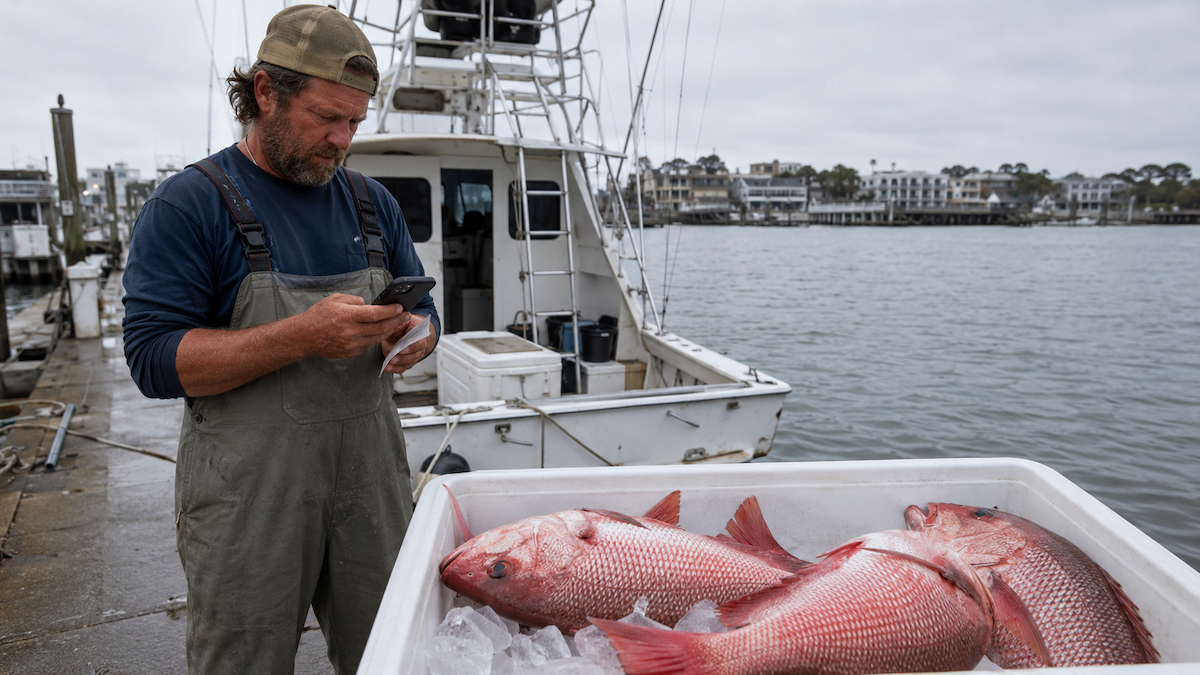
And here's a number that might surprise you. Roughly 9 million redfish are caught and released in South Carolina every year. With an estimated 8% release mortality rate, that means approximately 720,000 redfish die after being released — by anglers who were trying to do the right thing. That's almost two and a half times the roughly 300,000 that are intentionally harvested annually. The circle hook requirement is aimed directly at this problem. Inline circle hooks are significantly less likely to gut-hook a fish, which is the primary cause of release mortality. A fish hooked in the corner of the mouth swims away. A fish hooked in the throat often doesn't.
If you're already using inline circles, you're ahead of the curve. If you're not, now's the time to make the switch before the bill passes and everyone's scrambling. For redfish on live bait, a 4/0 or 5/0 inline circle hook covers most situations — finger mullet, live shrimp on a carolina rig, chunk bait on the bottom. Gamakatsu, Owner, and Eagle Claw Trokar all make quality non-offset options in those sizes. If your local shop is cleaned out — and they might be once this passes — the Mustad Demon Perfect Inline is another solid option that checks every box. The key specs to look for: inline (non-offset) point, high carbon steel (not stainless), and 4/0 or 5/0 for most inshore redfish applications.
One thing worth noting about the circle hook transition — they fish differently than J-hooks. You don't set the hook. You reel tight and let the fish turn. The hook finds the corner of the mouth on its own. If you've been setting the hook hard your whole life, there's a learning curve. But it's short, and the hookup rate is actually better once you trust the process.
The slot change is worth thinking about too. Moving the minimum from 15 to 18 inches means those small slot fish you've been keeping are now undersized. An 18 inch redfish is roughly a 2 to 3 year old fish — giving them those extra inches and extra year of growth before they're harvestable adds meaningful reproductive capacity back into the population. On the upper end, bumping the max from 23 to 25 inches lets anglers keep slightly larger fish, which makes sense when you're only allowed one per day.
The bill was introduced by Sen. George Campsen and passed the Senate Fish, Game and Forestry Committee unanimously with what observers described as informed and productive discussion. CCA South Carolina has supported every major red drum conservation measure to date, and the fishing guide community appears broadly supportive. The general sentiment from anglers who've been paying attention seems to be that the science justifies the changes, even if one fish per day stings.
South Carolina has a long history of adjusting redfish regulations in response to population data. The species was designated a gamefish in 1986, ending commercial harvest. A 20-fish daily limit was introduced in 1987. Slot limits were added in 1990. The limit was reduced to 5 in 1991, then to 2 in 2001, bumped to 3 in 2007, and brought back to 2 in 2018. Each change was driven by the data available at the time. This bill is the next step in that same pattern.
Whether you think one fish per day is the right number or not, the data behind it is real. The fish need help. And if requiring inline circle hooks means more of the reds we release actually survive, that's a straightforward win regardless of where you stand on the bag limit.
The bill is currently in the House Agriculture, Natural Resources and Environmental Affairs Committee. If it follows the expected trajectory, it could be signed into law in the coming months. We'll update this article as it moves.
Adjust your tackle now. Fish smarter. And keep an eye on S.961.
 charleston
 Charleston fishing
 charleston fishing