Charleston Shore Fishing — Where to Fish Without a Boat
You don't need a boat to catch fish in Charleston. Here's every public pier, bridge, and bank spot worth fishing — plus what to target, when to go, and what to bring.
You don't need a $40,000 bay boat to catch fish in Charleston. The tidal system here pushes water through creeks, rivers, and harbors twice a day, funneling bait past every pier, bridge, and seawall in the system. You just need to know where to stand and when to show up.
The average tidal range in Charleston is 5 to 6 feet. That's a lot of water moving through tight spaces — which means current, which means feeding opportunities around any fixed structure in the path. This guide covers every major shore-accessible fishing spot in the Charleston area organized by neighborhood, what species to expect, and the gear that actually works from the bank.
FOLLY BEACH / JAMES ISLAND
This is where most Charleston shore anglers start, and for good reason. The Folly Beach Pier puts you over Atlantic water, and the James Island side gives you Stono River access.
Folly Beach Ocean Fishing Pier — The longest pier in the area at over 1,000 feet, extending straight into the Atlantic. This is your best shot at Spanish mackerel, bluefish, whiting, and pompano from shore. Sheepshead stack around the pilings year-round. Black drum show up on fiddler crabs in spring. The pier has a tackle shop, rod rentals, and restrooms — it's the most complete setup for shore anglers in Charleston. Paid access, no state fishing license required.
Best months: March through November for variety. Winter is slower but sheepshead and black drum still produce around the pilings.
Sol Legare Fishing Pier — On the Stono River, James Island side. Free, open year-round. Stono water carries good sheepshead and redfish action, especially on moving tides. The nearby artificial reef holds fish that patrol within range during tide changes.
James Island County Park Pier — On the Stono River with a tidal creek connection. Subject to park fees but great for families with full facilities. The creek mouth nearby concentrates bait on outgoing tide — fish the edges where the creek dumps into the river.
DOWNTOWN CHARLESTON
You can literally catch fish in the shadow of the Holy City. The water here is all harbor and Ashley River — more brackish, different species mix, but productive.
Brittlebank Park Pier — On Lockwood Drive along the Ashley River. A 320-foot pier with a shade structure at the end. Good for families and beginners. Redfish, trout, and the occasional flounder. Summer brings more variety, winter concentrates on redfish and sheepshead. No fee, open sunrise to 11 PM.
The Battery / White Point Gardens — Downtown Charleston's seawall on the harbor. About 1.5 miles of waterfront access. Not the most productive fishing in town, but sheepshead hold around the rocks and redfish cruise through. Free, open year-round, and the scenery doesn't hurt.
MOUNT PLEASANT / SULLIVAN'S ISLAND
This is where the fishing gets serious from shore. The Cooper River, harbor currents, and Breach Inlet create some of the strongest tidal flow in the area — which means aggressive feeding.
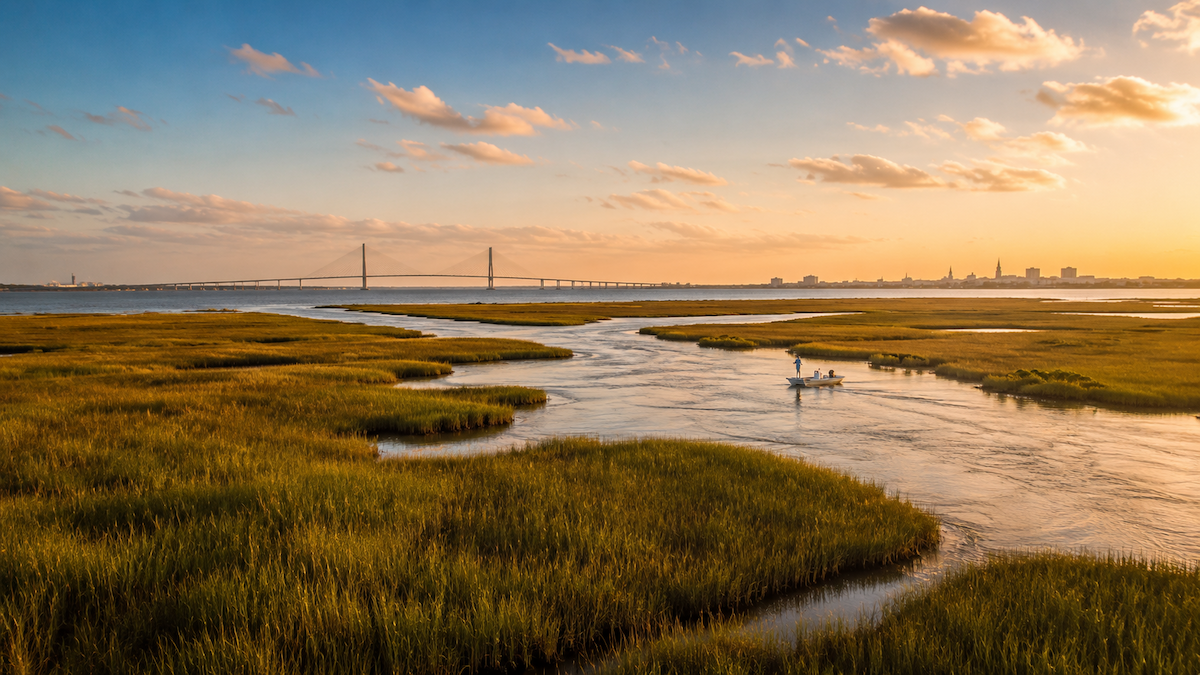
Mount Pleasant Memorial Waterfront Pier — Under the Ravenel Bridge over Cooper River water that moves hard. Sheepshead, speckled trout, redfish, and flounder are all realistic targets. The bridge pilings create current breaks that hold bait and predators. Tackle shop on site, paid entry, no state license required. Fish fiddler crabs tight to the pilings for sheepshead. For trout and reds, a popping cork with live shrimp suspended 18-24 inches below works along the current seams.
Pitt Street Bridge — The old bridge remnants at the end of Pitt Street on the ICW. A local favorite — the ICW current brings bait past the old pilings consistently. Redfish, trout, sheepshead, and flounder. Parking is limited but access is free and year-round.
Breach Inlet Bridge — The bridge between Sullivan's Island and Isle of Palms with catwalks on both sides. One of the highest-velocity tidal cuts in Charleston. The current rips through here, which means incredible bait concentration and aggressive feeding from redfish, flounder, trout, and bluefish.
Fair warning: the currents here are genuinely dangerous. SCDNR puts a caution on this one for a reason. Fish the edges, not the center of the flow. Keep your rig heavy — a 1-2 oz jighead or Carolina rig is the minimum. And if you're fishing the surf side, bring sputnik sinkers. The wire legs dig into the sand and hold your bait in place when regular weights get swept away by the current. You DO need a valid SC saltwater fishing license here. No fee, no facilities, open year-round.
ISLE OF PALMS / NORTH
More exposed water, more surf fishing opportunity, and some quieter spots with less pressure.
IOP County Park Pier — In the heart of Isle of Palms County Park. Whiting, black drum, and bluefish frequent these waters. Free to access. Picnic areas and restrooms make it a good family spot.
Buck Hall Fishing Pier — Off Highway 17 near McClellanville. A 1,100-foot pier managed by Cape Romain National Wildlife Refuge. This is a quieter spot with less pressure — you're away from the Charleston crowds. Redfish, trout, and flounder. Boat ramp on site too. Free, day use only.
Dawho Bridge Pier — Off Highway 174 toward Edisto, sitting over the ICW and Dawho River. Another low-pressure spot. Black drum, redfish, and sheepshead. Free, handicap accessible, year-round.
Cooper River County Park Pier — North Charleston on the Cooper River. Crabbing and fishing in designated areas. Less pressured than the bigger piers, good for a casual afternoon session.
WHAT TO TARGET BY SEASON
Spring (March-May): Sheepshead on fiddler crabs around pilings. Black drum arriving on structure. Flounder returning to sandy bottoms near docks and pilings. Trout picking up as water warms. Bluefish and Spanish mackerel start showing at ocean-facing piers by late April.
Summer (June-August): Widest variety from piers. Spanish mackerel and bluefish at Folly Pier. Whiting and pompano in the surf. Sheepshead year-round on structure. Redfish early and late in the day — midday heat pushes them deep.
Fall (September-November): Best overall shore fishing. Redfish are aggressive. Trout school up. Flounder feed hard before winter. Spanish mackerel still around through October. Bait is everywhere.
Winter (December-February): Slower but not dead. Sheepshead are the most consistent target on structure. Black drum around docks. Trout in deeper holes near bridges. Bluefish push through on cold fronts.
TIDE STRATEGY FOR SHORE ANGLERS
This is the part most shore fishing guides skip, and it's the most important thing.
Moving water is everything. The hour before and after high tide, and the hour before and after low tide — those slack periods are the slowest from fixed structure. You want the middle of the incoming or the middle of the outgoing, when current is pushing bait past your position.
For piers and bridges: incoming tide pushes bait from the ocean into the harbor system. Outgoing flushes bait from creeks and rivers past your structure. Both are productive, but outgoing tends to concentrate bait more predictably at creek mouths and bridge pilings.
For surf and beach spots: incoming tide pushes bait toward shore. Fish the troughs between sandbars as water fills in.
The single biggest mistake shore anglers make is fishing at dead slack tide and wondering why nothing is biting. Time your trip around the tide, not the clock.
THE SHORE FISHING LOADOUT
You don't need a boat's worth of tackle to fish from shore. But you do need a few things that make the difference between a frustrating trip and a productive one.
A medium-action 7-foot spinning rod paired with a 3000-size reel handles 90% of Charleston shore fishing. You're casting live bait under popping corks, working jigs along pilings, and occasionally bottom fishing with Carolina rigs. One rod does all of it. Pair it with 20 lb braided main line to a 20 lb fluorocarbon leader — the braid gives you sensitivity and casting distance, the fluoro disappears in the water.
For terminal tackle, carry circle hooks in 1/0 to 3/0 for live bait, a few popping corks, and jigheads in 1/4 oz to 1/2 oz for soft plastics.
Bait is simple: live shrimp covers almost everything from piers. Fiddler crabs for sheepshead. Mud minnows for flounder. If you can throw a cast net and catch finger mullet, that's deadly under a cork for trout.
Sand spikes — If you're fishing the beach or surf, you need rod holders that stick in the sand. The DoubleFill PVC Sand Spikes are a 4-pack that'll hold your rods while you watch for bites instead of holding a rod for three hours straight.
Sputnik sinkers — Charleston surf current is no joke. It's not uncommon to have 4 or 5 ounces on your line and still watch it get swept down the beach. Sputnik spider sinkers have wire legs that dig into the sand and hold. Your bait stays right where you put it while everyone else's rig is tumbling down the beach. If you fish Folly Beach surf, Breach Inlet, or any exposed shoreline — these are non-negotiable.
A fishing wagon — Here's the thing nobody tells you about shore fishing: getting your gear TO the spot is half the battle. You've got rods, a tackle bag, a 5-gallon bait bucket, a cooler, sand spikes, maybe a chair. Carrying all of that across 200 yards of soft sand will have you questioning your life choices before you make your first cast. The Polar Aurora Fishing Cart has all-terrain wheels that actually roll on sand, built-in rod holders, and 550 lb capacity. It's $150 and it'll save your back and your attitude every single trip.
SC REGULATIONS — KNOW BEFORE YOU GO
Redfish: 15-23" slot, 2 per person, 6 per boat
Speckled Trout: 14" minimum, 10 per person
Flounder: 16" minimum, 5 per person
Sheepshead: 14" minimum, 10 per person
Black Drum: 14-27" slot, 5 per person
Whiting: Part of 50/day aggregate with croaker and spot
Bluefish: 3 per person (5 on for-hire)
Spanish Mackerel: 12" minimum, 15 per person
Hardhead Catfish: Possession prohibited in SC saltwater — throw them back
Always verify current regulations at scdnr.sc.gov before your trip.
 charleston
 Charleston fishing
 charleston fishing