Charleston’s May Fishing Shift: What the Next Few Weeks Mean for Inshore Anglers
May is when Charleston’s inshore fishing starts to change fast. Warming water, stronger bait movement, shifting tides, and spring weather all affect where redfish, trout, flounder, and sheepshead set up.
May is one of those months where Charleston fishing starts to feel different almost overnight.
The water warms up, bait gets more active, afternoon weather becomes more of a factor, and fish that felt scattered a few weeks ago start giving you better clues. It is not summer yet, but it is not early spring anymore either. Around Charleston, that in-between window matters.
For inshore anglers, the next few weeks are all about paying attention to what is changing — not just what the weather app says.
The Water Is Warming, and Fish Are Moving With It
As water temperatures climb, the inshore bite usually gets more consistent. Redfish are still a steady target around grass edges, oyster points, docks, and creek mouths, but they are not the only game in town now.
Speckled trout start becoming more reliable around moving water, especially where bait is getting pushed across points, current seams, and shell. Flounder also begin to show up better as bait settles into creek mouths, sandy cuts, and structure edges.
The important part is this: fish are not just “everywhere” because it is May. They are following bait, tide movement, and comfort zones. A clean moving tide with bait present is still a better sign than a pretty-looking flat with nothing happening.
Redfish Are Still the Reliable Play
If you want the safest inshore bet, redfish are still hard to ignore.
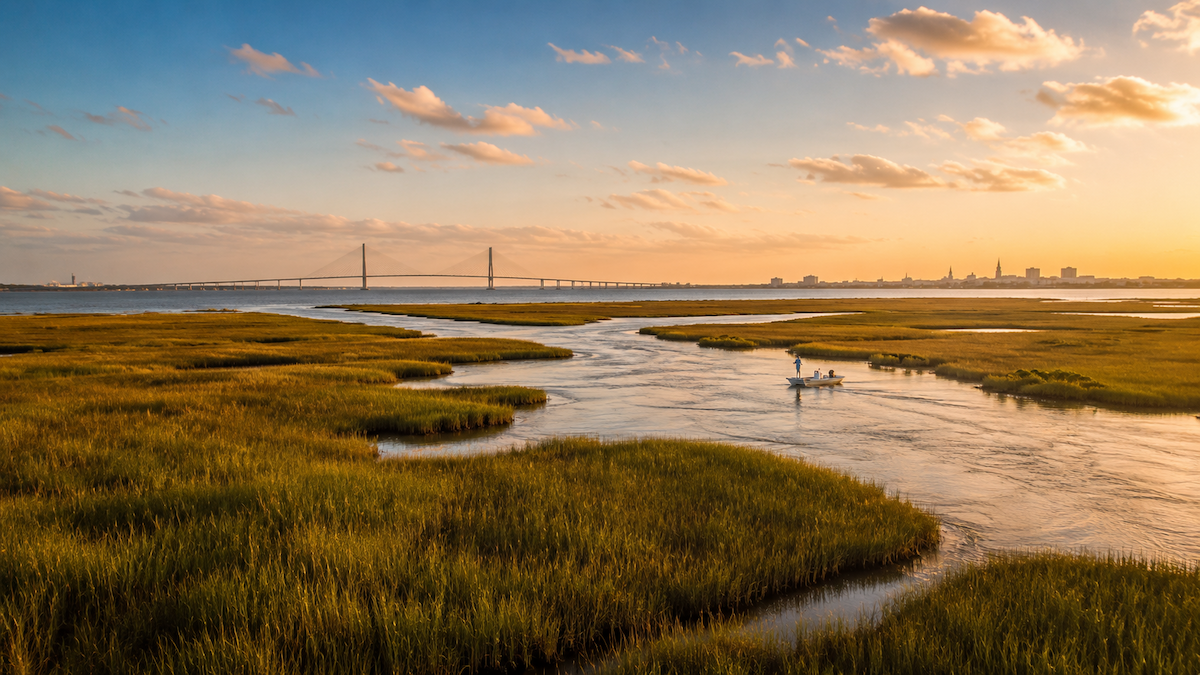
Look around oyster edges, marsh drains, dock lines, and shallow grass transitions. On higher water, reds can push tight to grass and flooded edges. On lower water, they tend to slide toward creek mouths, troughs, shell banks, and deeper edges where they can still move comfortably.
A lot of anglers make the mistake of fishing the same bank the same way all day. In May, it helps to think in tide stages. Where would bait be getting flushed? Where would fish have enough water to move? Where does the current make food easy?
That is usually a better starting point than just running to a favorite spot.
Trout and Flounder Start Becoming More Interesting
May is when trout and flounder deserve more attention in Charleston.
For trout, moving water is the key. Focus on current seams, shell points, creek mouths, and areas where clean water meets bait. Early morning can be especially good when wind is still manageable and the tide is moving.
Flounder are a little different. They are ambush fish, so think about edges. Creek mouths, sandy pockets, dock shade, drains, and small depth changes can all matter. If bait is being pushed through a narrow area, that is the kind of place worth slowing down.
You do not need to overcomplicate it. If the tide is moving, bait is present, and there is a clear edge or ambush point, you are at least asking the right question.
Wind Starts Deciding Where You Should Fish
May weather can look nice on paper and still fish rough if the wind is wrong.
A light breeze can help break up the surface and make fish more comfortable. But once the wind starts pushing hard across exposed water, it can make casting harder, muddy up certain banks, and turn a good-looking plan into a frustrating one.
On windier days, protected creeks, lee shorelines, docks, bridge structure, and tucked-away marsh edges usually make more sense than open flats or exposed banks.
A simple rule: do not just ask, “What is the wind speed?” Ask, “What water does this wind ruin, and what water does it protect?”
That one shift saves a lot of bad trips.
Rain and Fronts Can Help — Until They Don’t
Spring rain is tricky. A little weather ahead of a front can sometimes fire fish up, especially if pressure is falling and bait is moving. But heavy rain, dirty runoff, thunder, and big wind shifts can turn things off fast.
If showers are expected later in the day, the early window may be the cleaner play. If rain has already dumped into creeks, look for areas with better water movement and less runoff influence.
Charleston has a lot of shallow, muddy, marsh-fed water. That can be great when conditions line up, but it also means clarity and runoff matter after storms.
The Best May Trips Are Usually Tide-First
If there is one thing to watch over the next few weeks, it is tide timing.
A good May setup usually has at least two of these working together:
moving tide
bait activity
manageable wind
decent water clarity
comfortable water temperature
low storm pressure during your window
You do not need perfect conditions. You just need enough things pointing in the same direction.
That is where Charleston fishing gets fun in May. The fish are waking up, the bait is moving, and more species are becoming realistic targets. But the best days still come from reading the water, not guessing.
Bottom Line
May is a transition month in Charleston, and that is a good thing.
Redfish stay reliable. Trout and flounder become more interesting. Sheepshead remain worth watching around structure. Bait movement gets stronger. But wind, rain, and tide timing start mattering more every week.
The anglers who adjust fastest usually do better. Watch the tide, respect the wind, pay attention to bait, and do not be afraid to change water when the conditions change.
Charleston gives you plenty of options this time of year. The trick is knowing which ones actually match the day.
 charleston
 Charleston fishing
 charleston fishing