Black Drum Are Biting: Where Charleston Anglers Should Look This Month
Black drum are very much in play around Charleston right now, but the better move is not just “go fish somewhere.” Here is where they make the most sense to look this month based on current local reports, water conditions, and the kind of structure black drum consistently use in South Carolina.
If you want a clean spring target in Charleston right now, black drum deserve a hard look. The harbor is sitting around 68°F, winds in the harbor are manageable this week, and multiple current Charleston-area reports say the black drum bite is strong right now, including one report that flat-out says it is “on fire.” SCDNR’s April saltwater trends also say the bite for black drum should be strong this month.
That does not mean they are everywhere. The better read is that this is a month to look for black drum in places that combine hard structure, current, and something to eat. In South Carolina, SCDNR says black drum are estuarine-dependent and are typically found in habitats with vertical complexity such as oyster bars, salt marsh grass, natural rock outcroppings and reefs, and pilings. SCDNR also notes their distribution is tied to temperature and the availability of hard structure or oyster reef habitat.
Start with oyster bars, shell edges, and marsh structure
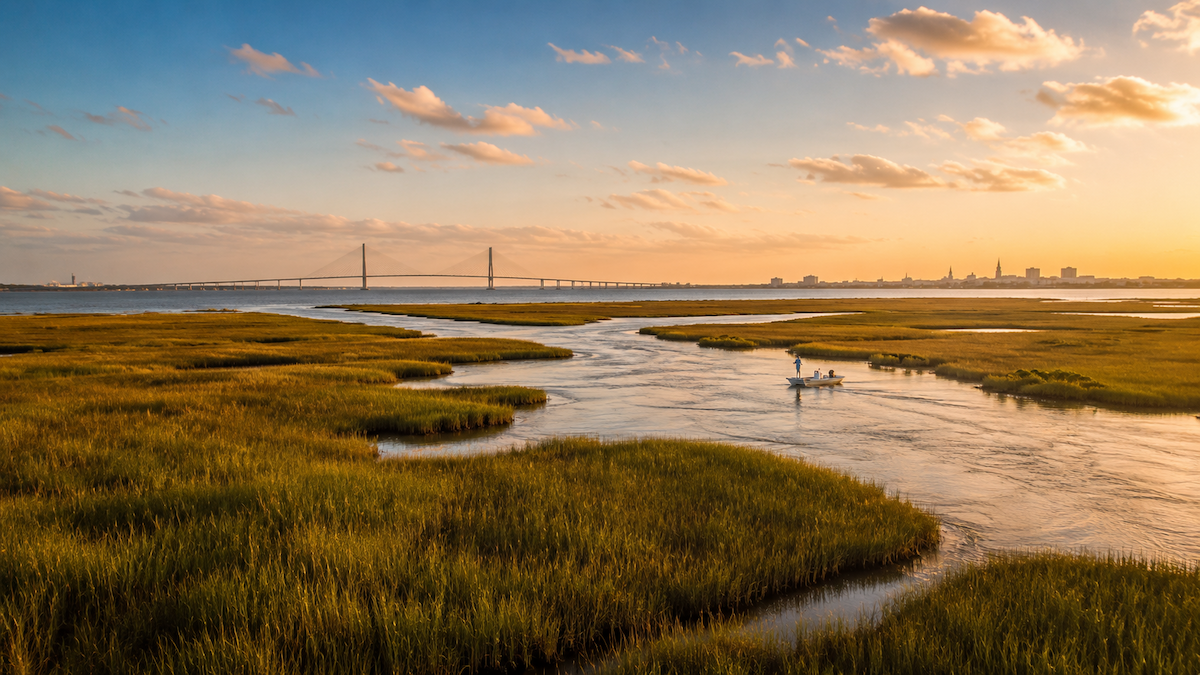
For Charleston inshore anglers, the first places I would look this month are oyster-lined banks, shell points, marsh edges with hard bottom, and any stretch of creek where fish can pin food against structure. That is not a random guess — it is the overlap between what black drum are documented to use in South Carolina and the kind of estuary habitat they are actively feeding in right now.
This is also why black drum so often feel “patternable” in spring when other bites still feel a little loose. They are not just roaming open water for no reason. They are usually around something: shell, pilings, marsh edge, reef, or another hard feature that concentrates food and gives them a clean feeding lane.
Do not ignore protected creeks
One of the more useful current local clues came from a Charleston report describing a windy day with 20+ mph northeast wind, where they tucked into a creek and caught small black drum on cut frozen shrimp. That matters because it tells you black drum are still a strong adjustment fish when the open water plan falls apart. Protected creeks are not just fallback water — right now they are part of the pattern.
So if Charleston gets choppy, muddy, or annoying in the more exposed parts of the system, I would not force it. I would slide into a creek with some protection, look for shell, grass edge, subtle depth change, or nearby pilings, and fish that water like it still has a real shot at producing. Local reports say it does.
Creek mouths and feeding intersections make sense right now
Another good spring clue is current. A current April Charleston report notes that with water warming, the outgoing tide near creek mouths becomes a “conveyor belt” of baitfish. That was not written specifically about black drum, but it matters here because black drum are feeding hard this month and those intersections are exactly where food gets delivered to fish using nearby structure. That is an inference, but it is a grounded one.
That means a creek mouth is most interesting when it is not just a line on a map, but a place where moving water meets shell, grass, or pilings. In Charleston, that kind of setup tends to fish a lot better than featureless water with the same tide running through it.
Follow the food, especially crustaceans
A fresh Folly Beach April report said customers caught dozens of redfish and black drum on peeler crabs on April 7, and noted that if peelers are unavailable, head-on shrimp and hard crabs can still produce fish. That is a strong reminder that black drum are not just “around structure” fish — they are around structure because that is where a lot of their food lives.
So when you are deciding where to look, think less about “named spots” and more about where shell and current can keep crabs, shrimp, and other forage within reach. That usually points you back to the same Charleston stuff over and over: oyster banks, creek bends with shell, pilings, marsh drains with nearby hard edge, and protected creek water that still has enough movement to feed.
The MarshMind version of the decision
This month, I would look for black drum in Charleston in this order:
First, hard inshore structure — oyster bars, shell banks, pilings, and marsh edges with something firm or vertical nearby. SCDNR says that is core black drum habitat in South Carolina estuaries.
Second, protected creeks, especially when wind makes the more exposed water ugly. Current Charleston reporting already shows black drum being caught in exactly that scenario.
Third, feeding intersections — creek mouths, drains, and current edges where structure and food come together. That is the part many anglers skip, and it is usually where the “where should I look?” answer gets a lot sharper.
The real takeaway
The best answer this month is not “black drum are biting everywhere.” It is this: black drum are worth targeting right now in Charleston, and the smartest places to look are the places that combine hard structure, protected estuary water, and current-driven food. With harbor water around 68°F, a stable weather window, and multiple local reports pointing to a strong bite, this is a good month to stop overlooking them.
And that is really the decision. Not just whether black drum are biting. What kind of water is most likely to hold them today.
 charleston
 Charleston fishing
 charleston fishing