Charleston Creek Mouth Fishing 101: Why Outgoing Tide Ambush Points Are Everything
Creek mouths are the most consistently productive habitat type in Charleston's inshore waters. Here's the biology behind why outgoing tide turns every creek mouth into a feeding station — and how to fish them.
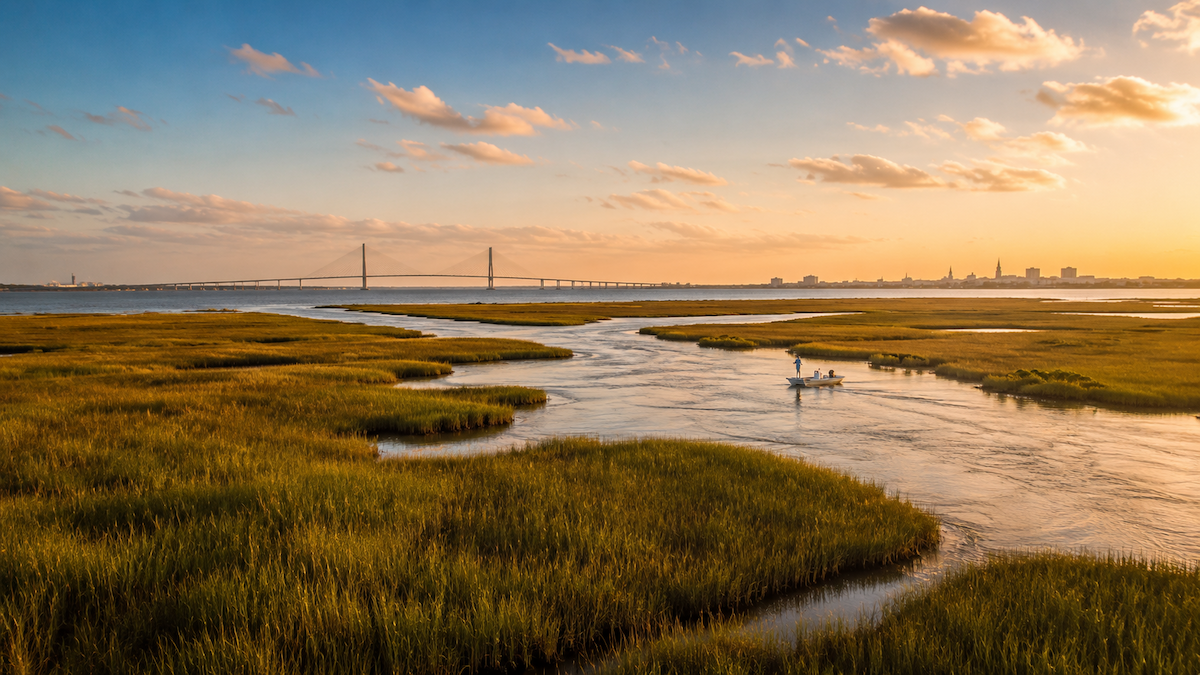
Charleston's inshore waters are a maze of tidal creeks cutting through Spartina marsh. Hundreds of them. Some barely wide enough for a kayak, others big enough to run a bay boat through at high tide. But every single one of them shares one feature that matters more to fish than almost anything else: a mouth where the creek meets a larger body of water.
That mouth is where the magic happens. And if you understand why, you'll never look at a tide chart the same way again.
The Funnel Effect
Think of a tidal creek as a giant drain. When the tide is high, water pushes up into every creek, flooding the surrounding marsh. Shrimp, mullet, minnows, and crabs spread out across the flooded grass to feed and hide. The marsh is their grocery store and their shelter — it's why the Lowcountry produces so much life.
But when the tide turns and starts dropping, all that water has to go somewhere. It funnels back out through the creek and dumps into the main river or waterway through one narrow point: the mouth.
And everything living in that creek gets funneled right along with it.
Shrimp that were scattered across acres of flooded marsh suddenly have no choice but to ride the current out through a bottleneck that might only be thirty yards wide. Mullet that were grazing in the shallows get pushed into the same tight lane. Fiddler crabs that got caught in the wrong spot get swept along.
Every predator in the system knows this. Redfish, flounder, speckled trout, and black drum don't chase food across open water when they can just park at a creek mouth and let dinner come to them. It's the most energy-efficient feeding strategy in inshore fishing — and it's why creek mouths are the most reliable ambush habitat in Charleston.
Why Outgoing Tide Is King
You can catch fish at creek mouths on any tide stage. Incoming tide pushes bait into the creeks and fish follow it in. Slack tide can produce if fish are holding in the deeper holes near the mouth. But outgoing tide is when creek mouths become a conveyor belt of food, and the fishing goes from good to absurd.
The mechanics are simple. As water drains from the marsh, current velocity increases at the mouth. That current creates three things fish need: concentrated bait, oxygenated water, and defined feeding lanes. Fish don't have to search — they just face into the current and eat whatever washes past.
The best window is typically the last two to three hours of the outgoing tide. Early in the drop, there's still too much water and bait is still spread out. But as the water level falls and the marsh starts draining in earnest, the funnel tightens. Bait density at the mouth increases exponentially. By the time you're in the bottom third of the tide, every shrimp and minnow left in that creek is getting pushed through a narrow corridor of moving water.
That's when you'll see redfish stacked at the mouth in groups. That's when flounder lay on the sandy bottom at the edge of the current seam and ambush anything that drifts past. That's when speckled trout set up on the deeper side of the mouth and slash at bait in the current.
Reading a Creek Mouth
Not every spot at a creek mouth fishes the same. The anatomy of the mouth determines where fish hold, and understanding the structure lets you put your bait in the right lane instead of casting blindly.
The current seam is your starting point. Where the outflowing creek water meets the slower water of the main waterway, you'll see a visible line — a change in water color, surface texture, or current speed. Fish stack along this seam. Flounder especially love the transition zone where fast water meets slow water, because bait gets disoriented at the edge.
Oyster bars at or near the mouth are the next thing to look for. Oyster rakes act as natural current breaks and create small eddies where fish can hold without fighting the main flow. Redfish love to sit just downstream of an oyster bar and pick off bait that gets swept over it. Black drum crush oysters directly.
The deep hole just inside or outside the mouth is where bigger fish tend to hold. Most creek mouths have a scour hole where current has carved out a deeper pocket. This is where the larger redfish and flounder sit, especially during stronger tidal flow when the shallow edges are ripping too fast.
Finally, the shallow flat on the inside of the mouth — the area where the creek widens before hitting the main waterway — is where you'll find fish on the earlier stages of the outgoing tide before the water gets too low. Redfish will feed up on these inside flats and then drop back to the mouth as water drains.
How the Bait Tells the Story
Pay attention to what's coming out of the creek. The bait that's flushing through the mouth tells you exactly what to throw and where the fish are positioned.
If you see shrimp popping on the surface as they get pushed by current, the fish are keyed on shrimp. A live shrimp under a popping cork drifted through the current seam will get crushed. If you see schools of finger mullet getting pushed out of the creek in pods, throw a paddle tail or a DOA Shrimp on a jig head and work it through the same lane.
Mud boils near the mouth — clouds of sediment kicked up from the bottom — often indicate redfish or black drum rooting around the oyster structure. They're feeding on crabs and oysters, not chasing bait in the current. In that situation, drop a fiddler crab or piece of fresh shrimp right on the bottom near the disturbance.
One of the most exciting things you'll see at a Charleston creek mouth is a blowup — a sudden explosion of baitfish on the surface as a redfish or trout slashes through a school. When this happens, it usually means fish are actively herding bait against the current edge. Get a cast in the vicinity immediately.
The Species Breakdown
Different species use creek mouths differently, and knowing their tendencies helps you target what you're after.
Redfish are the creek mouth generalists. They'll feed at every level — rooting on the bottom around oysters, cruising the shallow edges, or slashing at bait in the current. On outgoing tide, they typically start feeding on the shallow inside flat and progressively move to the mouth as water drops. A school of reds stacked at a draining creek mouth on the last hour of falling tide is one of the best sights in Charleston inshore fishing.
Flounder are ambush specialists. They lay flat on the bottom at the edge of the current seam — the transition between moving water and still water — and attack anything that drifts past. The sandy or muddy bottom just outside the creek mouth is prime flounder habitat. They face into the current and strike upward, so a bait bumped along the bottom through the current edge is the classic presentation.
Speckled trout tend to hold in the deeper water just outside the mouth, especially during cooler months. They face into the current and strike at bait washing out of the creek. Trout prefer slightly deeper water than reds and will often sit in the scour hole or along a deeper channel edge adjacent to the mouth.
Black drum are structure-oriented and will hold right on the oyster bars at or near the mouth. They don't chase — they crush. Fiddler crabs and shrimp on the bottom near hard structure are the play. You'll often hear them popping oysters if the water is calm enough.
Why Charleston Has So Many Creek Mouths
The Charleston Lowcountry marsh system is one of the most productive estuarine environments on the entire East Coast. The combination of massive tidal range — typically five to six feet — with thousands of acres of Spartina marsh creates an incredible network of tidal creeks that drain and fill twice daily.
Every waterway in the system has creek mouths worth fishing. The Stono River, the Ashley, the Wando, the Cooper, Shem Creek, the ICW — every one of them receives drainage from dozens of smaller creeks. Some of those creek mouths are well-known spots. Many more are unnamed cuts that only a handful of locals have ever fished.
The sheer number of creek mouths in the Charleston system means you're never stuck on crowded water. If one mouth is taken, there's another one a quarter mile away that fishes just as well. The fish don't care about the name on the chart — they care about current, bait, and structure.
Timing It Right
Creek mouth fishing is entirely tide-dependent. The same spot that's on fire during the last two hours of falling tide might be dead during incoming or slack. Planning your trip around the tide chart is not optional — it's the difference between a five-fish day and a blank.
For outgoing tide creek mouth fishing, you want to be set up and fishing before the peak outflow hits. Arrive at the mouth about two hours before low tide. This gives you time to read the water, find the current seam, and identify where bait is moving before the best window opens.
Watch the water level on the surrounding marsh grass. When the water drops below the grass line and you can see the mud starting to expose, the drain is accelerating. That's your green light.
The bite typically peaks in the final 60 to 90 minutes before low tide, when current is strongest and bait concentration is at its maximum. It often shuts off within minutes of the tide bottoming out — once current stops, the conveyor belt stops, and fish scatter.
MarshMind's AI processes every environmental variable that influences creek mouth feeding — tide stage, current velocity, water temperature, wind exposure, barometric pressure, bait patterns, and species-specific behavior — and scores every creek mouth zone in real time. Instead of guessing which mouths are fishing well today, let the data point you to the ones the AI ranks highest for your target species right now.
 charleston
 Charleston fishing
 charleston fishing