June Fishing in Charleston, SC: How to Beat the Heat and Still Find Redfish, Trout, and Flounder
June in Charleston can still fish well if you work the cool parts of the day, match the tide, and target the right structure. Here’s how local anglers can approach redfish, trout, flounder, sheepshead, pier fishing, and nearshore options without wasting the best window.
June is one of those months where Charleston fishing can be excellent — but it gets less forgiving.
The bait is here. The water is warm. Redfish, trout, flounder, sheepshead, Spanish mackerel, sharks, and even tarpon start becoming part of the conversation. But the same summer pattern that creates opportunity also punishes lazy timing. If you launch late, ignore the tide, or fish exposed water in the heat, June can feel dead fast.
The better move is simple: fish early, fish moving water, and pick zones that match the tide instead of forcing the spot you wanted to fish.
The June Pattern: Early, Moving, and Shaded
The best Charleston inshore window in June is usually the first part of the day. Low light keeps bait more comfortable, predators are more willing to feed shallow, and you can often get a topwater bite before the sun gets too high.
That does not mean the bite completely dies after breakfast. It means the game changes.
Once the heat builds, fish usually get more structure-oriented and tide-dependent. Redfish slide tighter to grass lines, docks, oyster edges, and shaded ambush points. Trout may hold around current seams, creek mouths, and deeper edges. Flounder become a better target around drains, points, sandy transitions, and places where bait is getting swept past them.
In June, the question is not just “where are the fish?”
It is “where will the fish be comfortable enough to eat during this part of the tide?”
Redfish: Grass Lines, Structure, and the Right Stage of Water
Redfish are still one of the most reliable Charleston targets in June, but they are not always sitting where they were in spring.
Smaller redfish often relate to grass edges, oyster points, creek mouths, and docks. They may not be in the big winter schools anymore, so do not expect every productive area to look obvious. A few fish on a clean edge can be better than a giant flat with no bait.
On higher water, look for reds pushing along grass lines, feeding near flooded edges, or using shade around docks. On lower water, focus on drains, oyster bars, creek bends, and cuts where bait has to move.
For bait and lures, keep it simple:
Live shrimp or mud minnows under a popping cork around grass and shell
Cut mullet or menhaden around deeper structure and current
Paddle tails, shrimp imitations, and weedless soft plastics around oyster edges
Topwater early when bait is active and the water is calm enough
The biggest mistake in June is staying too long in dead water. If there is no bait, no current, and no sign of life, move.
Trout: Topwater Early, Then Current Seams
Spotted seatrout can be excellent in June, especially during the first light window.
Early in the morning, topwater can be one of the most exciting ways to fish. Calm banks, shell points, creek mouths, and grass edges with bait are all worth a few casts. But topwater should not become a stubborn habit. Once the sun gets high or the fish stop committing, switch.
A popping cork with live shrimp is one of the most dependable Charleston trout setups in summer. Artificial shrimp, suspending twitch baits, and light jigheads can also work when fish are holding in current.
The best trout areas usually have a few things in common:
Moving water
Bait nearby
A depth change
Grass, shell, or a point that breaks current
If all four line up, it is worth slowing down.
Flounder: Fish the Drains and Edges
Flounder are a strong June target for anglers who are willing to fish carefully.
They are ambush feeders, so think less about covering random shoreline and more about where bait gets funneled. Creek drains, sandy cuts, dock edges, oyster-to-mud transitions, and points near moving water are all worth attention.
Mud minnows, finger mullet, shrimp, and soft plastics on jigheads can all work. The key is keeping the bait close to bottom and working the edge slowly enough for a flounder to react.
A good June flounder spot often looks boring until the tide starts moving. Then bait gets pulled through a pinch point, and the whole area turns on for a short window.
That is the pattern MarshMind is built around: the spot is not always good or bad. The timing decides.
Sheepshead: Hard Structure Gets Better in Summer
If the inshore bite feels slow, sheepshead are a smart backup plan.
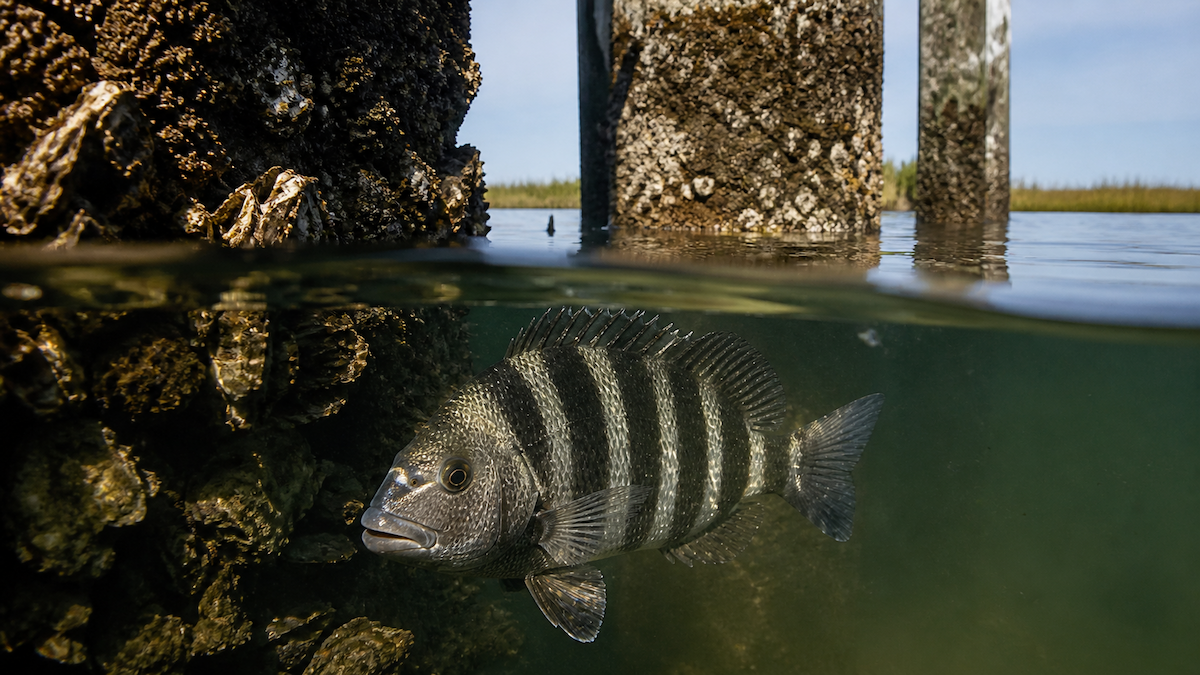
Bridge pilings, docks, rock piles, jetties, and other hard structure can all hold fish. Fiddler crabs and shrimp are the classic choices. The trick is getting tight to the structure and feeling the bite before the fish steals the bait.
June sheepshead fishing rewards patience. It is not always flashy, but it can save a hot day when redfish or trout are not cooperating.
Charleston Harbor and the Jetties
June is also when Charleston Harbor and the jetties become more interesting for bigger fish.
Bull redfish can be around deeper structure, channels, and the jetties. Sharks become common. Spanish mackerel, sheepshead, black drum, and other summer species can also show up depending on bait and conditions.
This is where caution matters. The jetties and harbor can fish great, but wind against tide, boat traffic, swell, and current can turn a decent plan into a rough one quickly. Do not treat the jetties like a casual creek bank. Check the marine forecast, tide, wind, and your boat’s limits before making the run.
Pier and Surf Anglers Have Options Too
You do not need a boat to have a good June fishing day in Charleston.
Folly Beach Pier and the local surf can produce a mixed bag in summer: whiting, croaker, pompano, black drum, sheepshead, Spanish mackerel, and sharks are all possible. The best results usually come from matching the setup to the target.
For bottom fishing, shrimp, Fishbites, sand fleas, and cut bait can all have a place. For Spanish mackerel, watch for clean water, bait, birds, and moving fish. For sharks, use proper tackle and handle them responsibly.
The same rule applies from shore: low light and moving water matter.
Nearshore Reefs: When to Make the Jump
June can be a good month to start thinking beyond the marsh if conditions allow.
Nearshore reefs may hold spadefish, Spanish mackerel, king mackerel, cobia, sharks, and other summer species. But this is not an automatic upgrade over inshore fishing. It is only worth it when the wind, swell, tide, and boat setup make sense.
For many Charleston anglers, the best June plan is flexible:
Start inshore early. Watch the weather. If the ocean is calm and the inshore bite is weak, nearshore may be worth a look. If the wind is building or storms are around, stay protected and fish smarter inside.
A Simple June Game Plan
If you are fishing Charleston in June, here is a clean way to think about the day:
Before sunrise to mid-morning:
Look for trout and redfish on topwater, popping corks, grass edges, shell points, and bait-heavy banks.
Mid-morning to early afternoon:
Shift toward docks, drains, deeper edges, shaded structure, and current seams. Flounder and sheepshead become better backup targets.
Big high tides:
Check grass edges and flooded marsh opportunities for redfish, especially if the water is high enough to let fish push into places they cannot normally reach.
Lower water:
Focus on drains, oyster bars, creek mouths, and places where bait gets forced out.
Hot, slack water:
Do not force it. Move, wait for current, or switch targets.
Final Read
June fishing in Charleston is not about grinding the same bank all day and hoping something changes. It is about timing.
The fish are here. The bait is here. The problem is that the best window may only last 45 minutes in the right place, and the wrong tide can make a good spot look empty.
Fish early. Respect the heat. Follow the bait. Match your spot to the tide.
And before you go, check the day’s read in MarshMind so you are not guessing which zones are worth your time.
 Charleston fishing
 charleston fishing
 charleston fishing